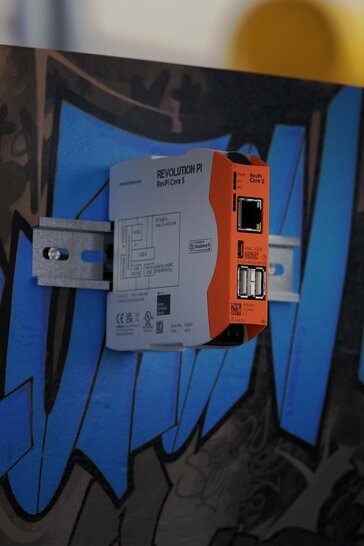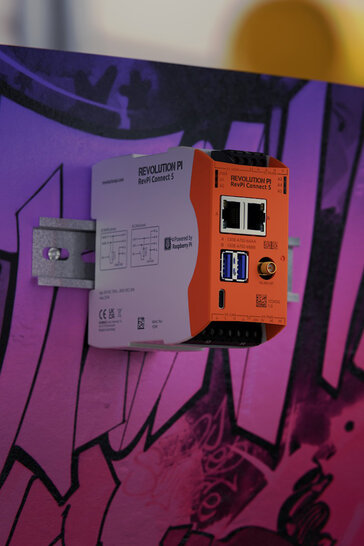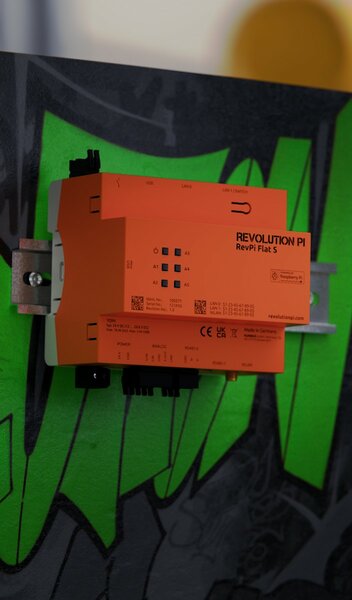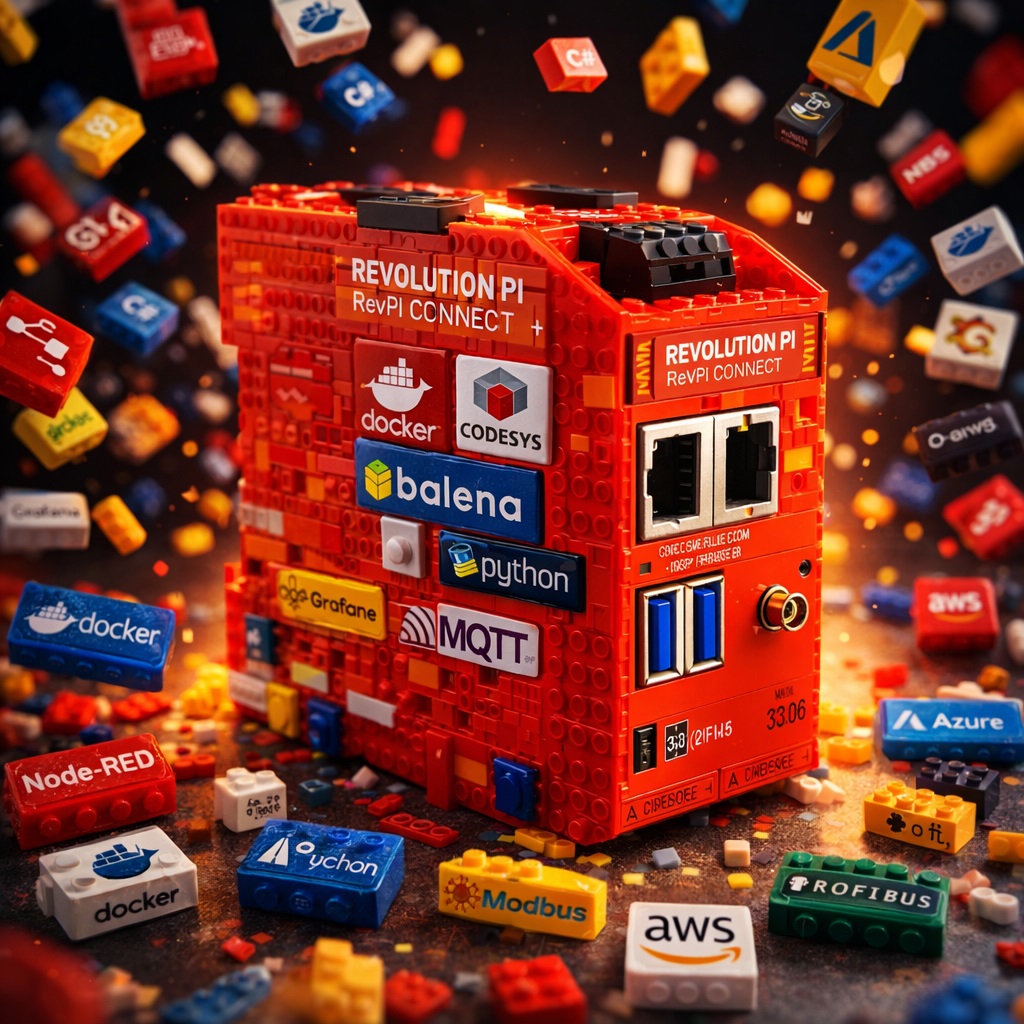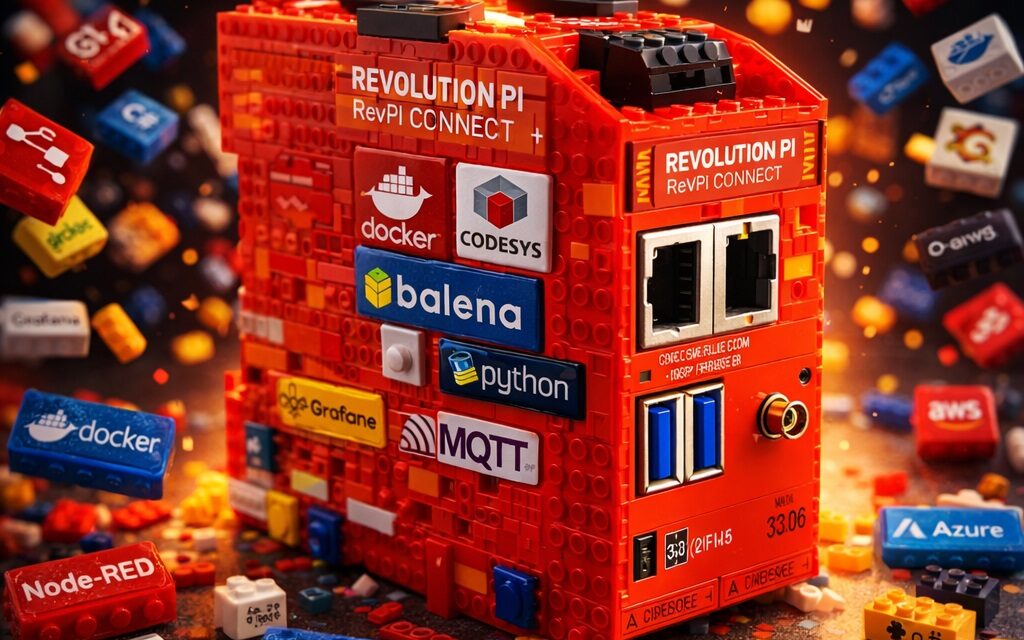
revolutionpi helps you build OT around your project requirements: add the features you need, remove what you don’t—so your system evolves without rebuilds.
Why advantage comes from architecture—not just devices
In OT projects, sustainable advantage often comes not from “which device?” but from “which architecture?” Every project differs in field conditions, integration points, data flow, cybersecurity expectations, and maintenance operations.
What “good architecture” covers
Where data is processed (edge vs cloud), how it’s transported (protocols), how it’s visualized (monitoring), and how it’s sustained (updates, logs, backups, observability).
Related reading
Define revolutionpi requirements in 6 questions
- Goal: Control, data acquisition, gateway, monitoring—or a mix?
- Protocols: Modbus, OPC UA, and other field protocols involved?
- Latency & resilience: Real-time needs and outage behavior?
- Visualization: Dashboards, alarms, reporting, KPIs?
- Deployment: How will updates/versions be managed?
- Operations: Maintenance, logs, observability, sustainability?
revolutionpi building blocks
- Rapid flows & prototyping: Node-RED
- Repeatable deployments: Docker
- Industrial workflows: OPC UA / CODESYS
- Monitoring & visualization: Grafana / InfluxDB
- Field data + flexible logic: Modbus / Python
Latest revolutionpi product series
Choose the base platform that matches your use case—then build your stack with the software blocks you need.