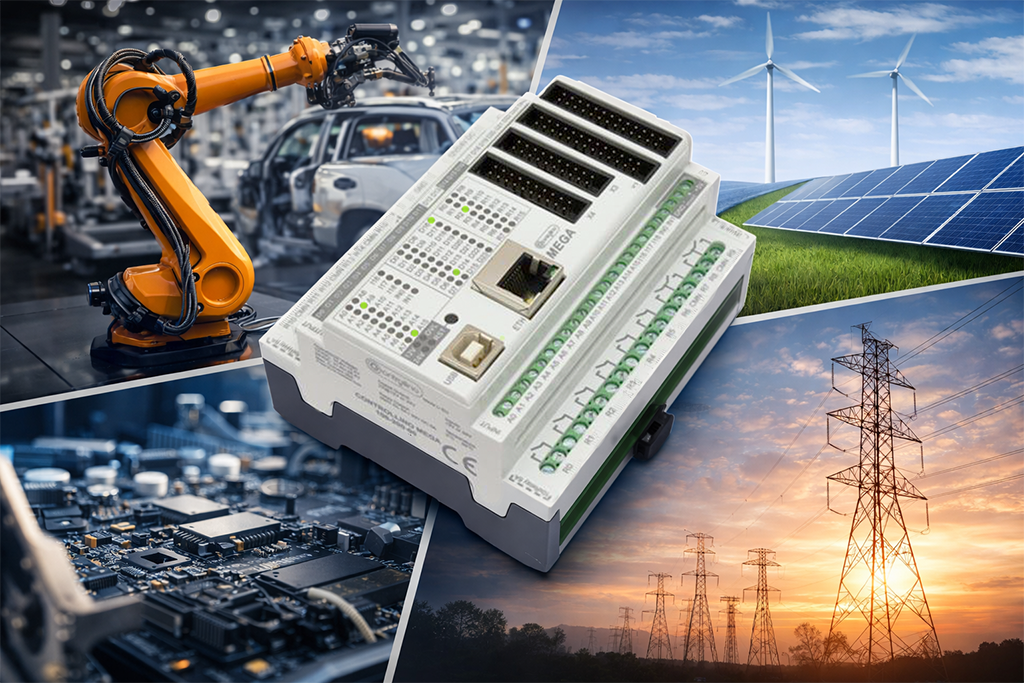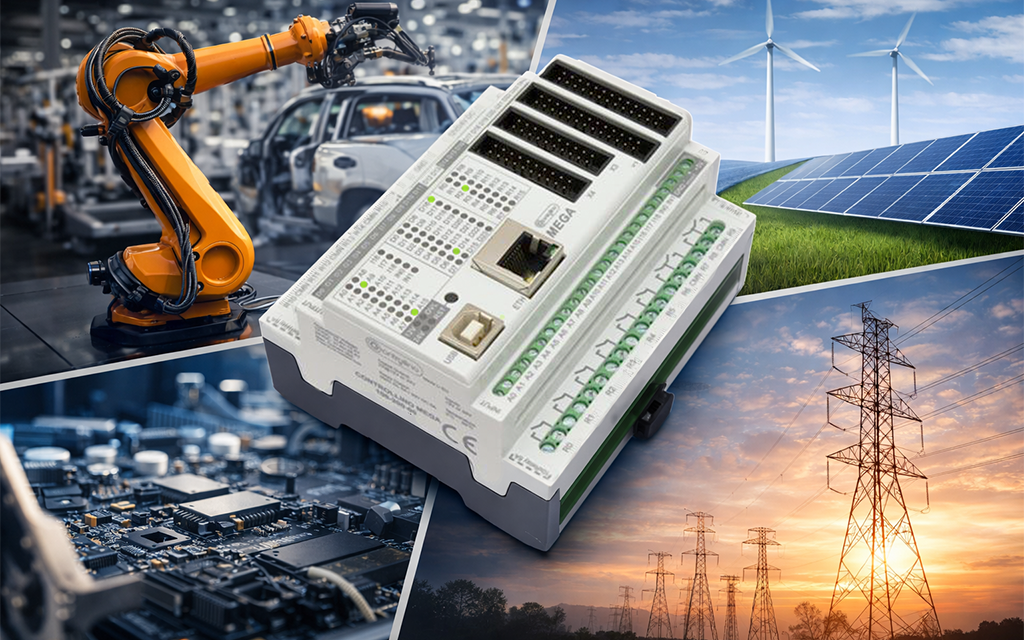
Arduino PLC: What Is It? Differences vs Arduino (Controllino Angle)
Arduino PLC is a practical way to move from Arduino prototyping to real industrial environments—where 24V I/O, DIN-rail panel mounting, wiring discipline, and maintainability matter.
Many teams start automation with Arduino for fast prototyping. But once a project must run reliably on the shop floor (often 24/7), the priorities change: panel wiring, field voltage levels, industrial communications, and serviceability become critical.
In this post, we clarify what “Arduino PLC” means, compare it with classic Arduino development boards (UNO/MEGA, etc.), and position the Controllino-style “Arduino-compatible industrial PLC” approach in a practical way.
Related Barnar page: Industrial Arduino PLC solutions
Example reference for Arduino-based industrial hardware: Industrial Shields – industrial hardware solutions based on Arduino
Note: Controllino is a brand name. It’s referenced here to describe a common “Arduino-compatible PLC” category and approach.
What is Controllino? (Arduino PLC-style approach)
Controllino is often mentioned when people search for “Arduino PLC” because it represents a common idea: keep Arduino compatibility and development speed, while aiming for more industrial-friendly deployment and wiring practices.
What is an Arduino PLC?
In practice, Arduino PLC typically means a controller that can be developed in the Arduino ecosystem (libraries, tooling, community), but is structured for industrial deployment—especially when the project must move from “it works” to “it runs reliably in the field.”
The goal is simple: preserve Arduino agility while reducing pain around panel integration, field wiring, and long-term maintenance.
What is an Arduino development board? (UNO/MEGA, etc.)
Arduino boards are excellent for education, labs, R&D, and rapid proof-of-concept work:
- Fast sensor/actuator experiments
- Low-cost prototypes
- Quick iteration in controlled environments
But when you bring an Arduino board directly into an industrial panel, you typically need extra pieces: power protection, proper terminals, relays/drivers, isolation, enclosure, and more.
Arduino PLC vs Arduino: the key differences
1) Arduino PLC and 24V I/O: field signals and interfacing
Industrial sensors and actuators often live in a 24V world. Arduino boards typically operate at lower logic levels, so field integration requires additional interface circuitry.
The Arduino PLC approach is about cleaner I/O integration, fewer ad-hoc boards/wires, and a more maintainable setup.
2) Arduino PLC and panel realities: DIN-rail, terminals, wiring discipline
On the shop floor, two questions matter immediately:
- “Can this be wired cleanly and serviceably inside a panel?”
- “Can a technician diagnose and fix it fast?”
Arduino PLC-style devices aim to reduce panel chaos. With a plain Arduino board, you usually design that structure yourself.
3) Arduino PLC connectivity: Modbus/RS-485/Ethernet and integration effort
As systems scale, “making it work” is not enough—you also need reliable communication with:
- Drives, meters, remote I/O, energy analyzers
- SCADA/MES/Cloud gateways
- Industrial field protocols (e.g., Modbus)
Arduino can do this, but it often means extra hardware and integration effort. An Arduino PLC approach targets a more deployment-ready baseline.
4) Arduino PLC reliability: continuous operation and maintenance mindset
A prototype may run “a few hours a day” without problems. Production expects:
- longer uptime,
- fewer interventions,
- easier maintenance.
Reliability is not only about the controller—power protection, wiring quality, enclosure, and service process often decide the outcome.
5) Arduino PLC software: Arduino IDE, team workflow, sustainability
Arduino projects commonly use Arduino IDE / C-C++. In industrial environments, the best choice is the one your team can maintain, document, and support over time.
Arduino PLC use cases: Automotive, Energy, Vision
Arduino PLC in Automotive
Automotive lines often require reliable control, repeatability, and quick maintenance. Arduino PLC-style controllers can be used in tasks like line monitoring, fixture control, and coordination of I/O in production processes.
Example (case study): Automotive production line – PLC Arduino (Case Study)
Arduino PLC in Energy
In energy environments, typical use cases include monitoring and control scenarios (measurement, alarms, data collection, and operational visibility).
Example (case study): Analyze electrical network – Control & Monitoring (Case Study)
Arduino PLC in Vision (Machine Vision)
In vision lines, the PLC often orchestrates camera triggering, lighting (strobe) synchronization, and “act on inspection result” logic (reject, stop, count, etc.). Arduino PLC-style solutions can fit where deterministic I/O control is needed.
Example: AI-Based Access Control Solutions with PLC + Camera (Case Study)
Machine vision triggering reference: Hardware triggering for machine vision cameras & lights (Guide)
Arduino PLC selection: quick decision matrix
| Arduino (Development Board) | Arduino PLC (Controllino-style / industrial approach) |
|---|---|
|
|
Prototype-to-production checklist (Arduino PLC mindset)
- I/O list: DI/DO/AI/AO, voltage levels, isolation needs
- Power: 12/24V supply, protection, grounding strategy
- Panel: DIN-rail, terminals, cable labeling, service access
- Communications: Modbus/RS-485/Ethernet, network topology
- EMC/EMI: shielding, termination, noise sources
- Software: versioning, logging, remote access strategy
- Maintenance: spares, failure scenarios, commissioning docs
- Scale: single machine vs line vs multi-site
FAQ
What is an Arduino PLC?
Arduino PLC usually refers to Arduino-friendly controllers built for industrial deployment concerns: field wiring, panel practices, 24V I/O interfacing, and maintainability.
Can I use Arduino libraries with an Arduino PLC?
It depends on the platform. Many Arduino-compatible industrial controllers aim to work within the Arduino ecosystem, but implementation details vary.
Can I use an Arduino board “like a PLC”?
You can implement control logic, yes—but you still need to solve industrial realities like 24V interfacing, protection, wiring, enclosure, and serviceability.
Why is 24V I/O important?
Because many industrial sensors and actuators use 24V signals, and direct connection is not always possible without proper interfacing.
Conclusion
- Arduino: excellent for learning and rapid prototyping
- Arduino PLC: focuses on panel-ready deployment and long-term maintainability
If you want to decide “Arduino vs Arduino PLC”, share your requirements (I/O list + field voltage + communications), and we can quickly map the best architecture.
CTA: Send your I/O + voltage + communications list, and we’ll review it together.